
Bone Health Supplements at Heinen’s
The following article was written by Heinen’s Chief Dietitian, Melanie Jatsek RD, LD.
Listen to this Article
Taking a supplement when you can get the same nutrition from food robs you of one of life’s greatest joys—enjoying the diverse flavors, textures, and aromas of a wholesome, delicious meal. Not only that, but whole plant foods also supply your body with so much more than vitamins and minerals, including bioactive compounds to support your health in ways that supplements can’t.
But sometimes you can come up short on certain nutrients no matter how well you plan, and logging your meals in a free nutrition tracking app like Cronometer can help you spot these nutritional gaps.
If you discover that food alone isn’t enough to meet your needs for important bone-building nutrients like calcium, vitamin B-12 and magnesium, you may want to consider adding a whole food-based supplement* to your routine.
Bone Health Nutrients: How Much Do You Need?
Meeting the recommended daily intake for these bone-strengthening nutrients is critical for avoiding conditions like osteopenia and osteoporosis.
- Calcium: The most abundant mineral in the body; 99% is in your bones and teeth
· 14–18 years = 1,300 mg
· 19–50 years = 1,000 mg
· 51–70 years = 1,000 mg for men; 1,200 mg for women
· 71+ years = 1,200 mg
- Magnesium: A mineral essential for bone development and mineralization
· 310-320 mg/day for women
· 400-420 mg/day for men
· 350-360 mg/day during pregnancy
· 310-320 mg/day for breastfeeding
- Potassium: A mineral that plays a critical role in bone mineral density by maintaining acid-base balance in the body. It also reduces urinary calcium loss and improves calcium retention.
· 2600 mg/day for adult women
· 3400 mg/day for adult men
· 2500-2900 mg/day for pregnancy
· 2800 mg/day for breastfeeding
- Vitamin D3: Promotes calcium absorption
· 600 IU/day for ages 19-70
· 800 IU/day for ages 71 years and older
· Note: This may not be enough to reach optimal blood levels. Ask your doctor for a 25-hydroxy vitamin D test to be sure.
- Vitamin K: Directs calcium to your bones instead of allowing it to build up in your arteries; Recommendations include both vitamin K1 and vitamin K2
· 90 mcg/day for adult women
· 120 mcg/day for adult men
- Vitamin B12: Important for maintaining bone mineral density
· 2.4 mcg/day
· 2.6 mcg/day for pregnancy
· 2.8 mcg/day for breastfeeding
- Protein: Essential for the growth and repair of muscles, bones, and other tissues
· Adults age 19-49: 0.36 grams of protein per pound of healthy body weight
· Adults age 50 and over: 0.45-0.54 grams of protein per pound of healthy body weight
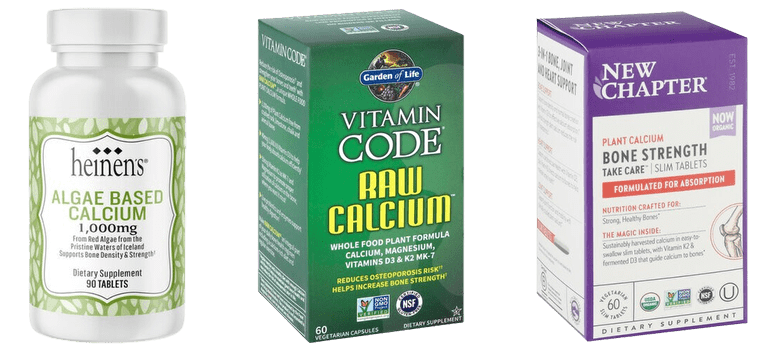
Whole Food-Based Calcium Supplements at Heinen’s (each includes magnesium, vitamin D3 and vitamin K2)
Calcium supplements are best absorbed when taken with food in 500 milligram doses or less at a time. Depending on the calcium gap you are trying to fill, you may need to take one with breakfast and one with dinner.
- Heinen’s Algae-Based Calcium
- Garden of Life Vitamin Code Raw Calcium
- New Chapter Bone Strength Take Care
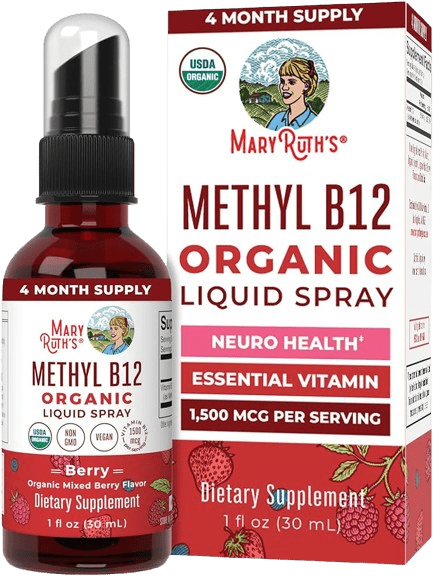
B12 Supplements
Potassium
You don’t need to pop a pill to get enough potassium! It’s easy to meet your daily needs when you pile your plate with these potassium-powered foods:
- Legumes and beans (cooked): Lentils (731 mg/cup), lima beans (955 mg/cup), kidney beans (717 mg/cup), and soybeans (886 mg/cup)
- Baked potatoes with skin: White potatoes (926 mg) and sweet potatoes (438 mg)
- Fruit: Avocado (975 mg/fruit), dried apricots (755 mg/half cup), prunes (637 mg/half cup), bananas (400-500 mg each), and cantaloupe (427 mg/cup cubed)
- Vegetables (cooked): Beet greens (1309 mg/cup), spinach (839 mg/cup), and acorn squash (896 mg/cup, cubed)
Collagen Peptides
Collagen is the most abundant protein in the body. It’s the building block of skin, muscles, bones, tendons and ligaments, and other connective tissues. Collagen peptides are small pieces of collagen protein that have been broken down so your body can digest and absorb them more easily.
Recent research shows that daily collagen peptide supplementation can support bone health by moderately improving bone mineral density and favorable bone turnover markers, especially when combined with calcium and vitamin D.
Two high-quality collagen peptide powders you will find in Heinen’s Wellness Department are:
- Heinen’s Grass-fed Pasture-Raised Collagen Peptides
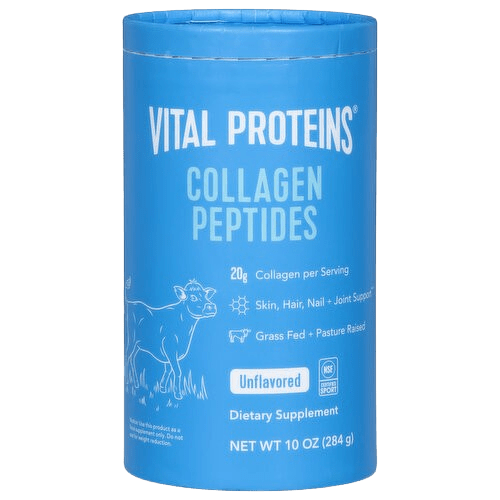
- Vital Proteins Grass-fed Pasture-Raised Collagen Peptides
Key Takeaway
The best way to achieve optimal bone health is through an Fx-style diet rich in leafy greens, beans, nuts and seeds, and soy foods. If this isn’t possible for you, consider adding one of the above whole food-based supplements to bridge any gaps.
*Check with your healthcare provider before starting any new supplements.