

How Fiber Fuels Your Gut and Stabilizes Blood Sugar
The following article was written by Heinen’s Chief Dietitian, Melanie Jatsek RD, LD.
Listen to this Article
If everyone focused on improving their gut health, disease rates would plummet. Yes, that’s a bold but very true statement. And no—this has nothing to do with 6-pack abs!
Let me explain.
Our gut is home to trillions of bacteria, both good and bad. When it’s full of friendly bacteria, we get to enjoy better overall health, but the opposite is true when the bad guys take over.
It makes sense to think of gas, bloating, constipation, and other digestive health problems here, because after all, we are talking about the gut! While “bathroom” issues can be a side effect of poor gut health, a less obvious problem is prolonged high blood sugar (i.e., diabetes).
Measuring Diabetes Risk
So how can you tell if you’re one of the 40 million Americans suffering from diabetes? Schedule an appointment with your doctor and request a hemoglobin A1c test.
Hemoglobin A1c, or glycated hemoglobin, is a test used to screen for and diagnose diabetes and prediabetes in adults. It measures the average percentage of glucose attached to hemoglobin in red blood cells over the past 2 to 3 months. The higher the level of glucose in the blood, the more glycated hemoglobin is formed, pointing to poor glucose control. Here’s what the numbers mean:
- Normal: 5.6 or lower
- Prediabetes: 5.7-6.4
- Diabetes: 6.5 or higher

Fiber: Your Gut’s Best Friend and Blood Sugar’s Secret Weapon
Diabetes is a condition caused by prolonged high blood sugar due to a problem with insulin, a hormone made by your pancreas that’s responsible for carrying glucose out of your blood and into your cells.
Diabetes develops when the pancreas either makes no insulin, not enough insulin, or plenty of insulin, but the cells become resistant to it. The result in all cases is too much sugar in the blood.
So, what does this have to do with our gut?
The gut regulates blood sugar by improving insulin sensitivity. When gut health is unbalanced (called dysbiosis), it contributes to insulin resistance and higher blood sugar.
And how does fiber fit into the story?
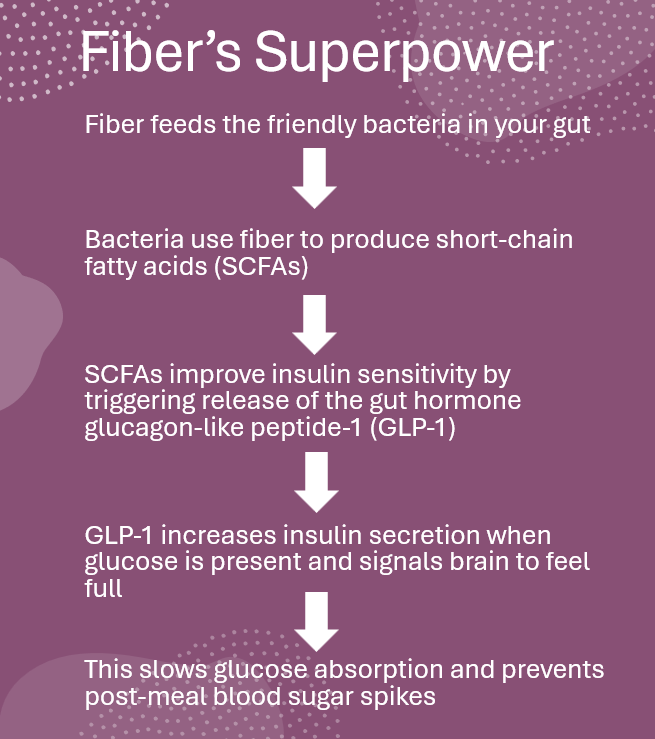
Dietary fiber ties it all together! Beneficial gut bacteria use fiber from fruits, veggies, beans, and whole grains as fuel to grow and multiply. In the process, they produce short-chain fatty acids (SCFAs)—organic compounds that help improve insulin sensitivity.
SCFAs also stimulate the release of glucagon-like peptide-1 (GLP-1), a gut hormone that boosts insulin secretion when glucose is present and signals the brain to feel full. Together, these effects slow glucose absorption and help prevent post-meal blood sugar spikes.
I can hear you now: “All right, Mel, skip the science lecture and tell me what to eat!”
The Best Diet for Healthy Blood Sugar
The road to a healthy gut and balanced blood sugar is the same: Increase your dietary fiber by adding whole food plants to each meal and reduce the amount of fat you eat.
The target goal is 30-35 grams of fiber per day, which works out to be around 10 grams of fiber per meal. Fiber rookies should take it slow and aim for more like 5 grams per meal, increasing as tolerated. To help you build fiber-rich meals like a pro, I created this list of the top 30 fiber-rich foods at Heinen’s.
Whether you’re a fiber newbie or seasoned fan, staying well-hydrated keeps things moving and helps prevent a not-so-fun “traffic jam.”
PS: To my meat-eating friends, you’ll see even better blood sugar results when animal protein looks more like a small side dish than a main course.
Fiber-Filled Meal Takeaways
As I mentioned in my article on Fiber Rich Foods to Fuel Your Heart, smoothies and salads are two of my favorite meals to help me hit the 35 gram-target. Here are a couple more ideas to help you reach your target
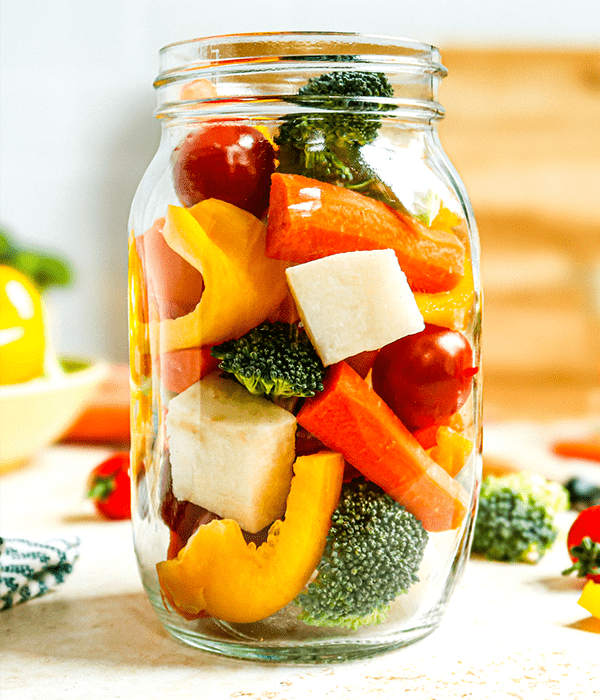
1. Magic Veggie Jar: Another daily staple is my magic veggie jar—a glass Mason jar filled with a variety of colorful raw vegetables that I enjoy as a snack or with a meal. Each container comes packed with 10 grams of gut-boosting fiber and more vitamins and minerals than I can count. Give it a try for one week and I know you’ll be just as hooked!
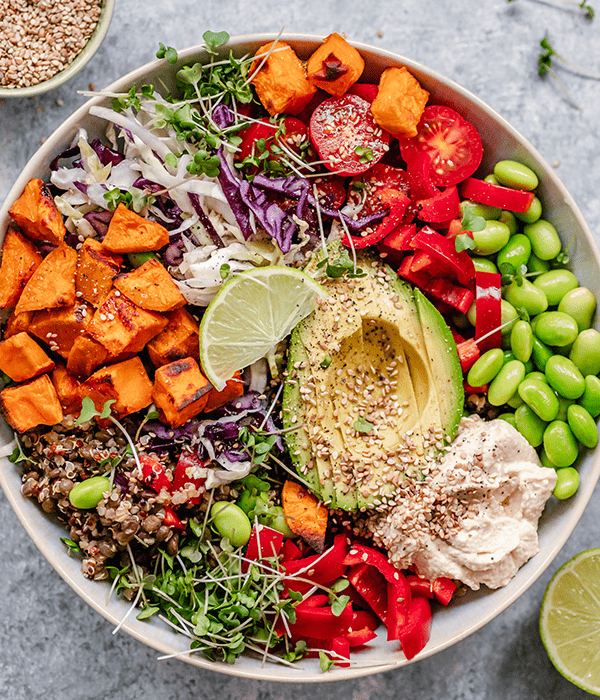
2. Power Bowls: If it’s a warm meal you’re craving, use this simple step-by-step toolkit to build your very own Power Bowl! The great thing about bowl-style meals is that they can be created with ingredients you have on hand, so you can enjoy a different, nutritious, and delicious meal practically every day of the week.
Key Takeaway
If you’re following along, you’ve probably noticed the pattern — a simple way to load up on fiber: Smoothie for breakfast + salad for lunch + power bowl for dinner + magic veggie jar for a snack. Fiber power, activated!

I love your Club FX information. It has helped me lower my cholesterol and blood pressure. The products you recommend help also. And I want to thank you for the Heinen’s gift basket I won. I use many of the products, can’t wait to try new ones.
I love that we get this helpful information from our grocer! It really demonstrates added value. So glad to have Melanie’s insight.
These articles are fantastic. Heinens emails are my favorite emails always.