
Nature’s Blueprint for Healthy Weight Loss
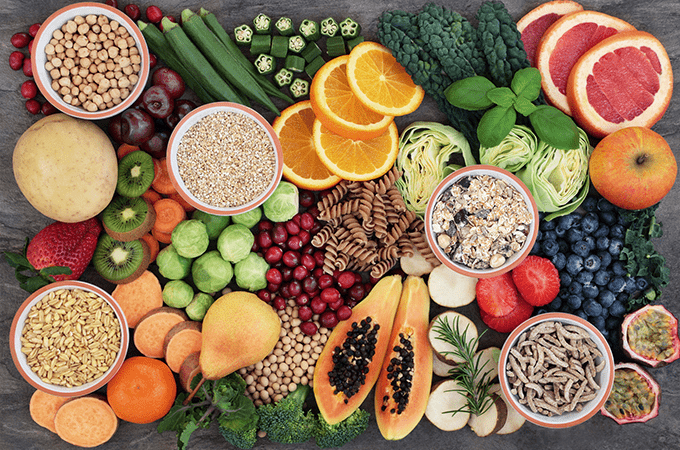
The following article was written by Heinen’s Chief Dietitian, Melanie Jatsek RD, LD.
Listen to this Article
We all have a life story and a whole slew of habits to go with it. Some of these habits are good, some are not-so-good, and some are downright ugly.
Because we are all so unique with different health goals, it doesn’t make much sense to suggest a boilerplate meal plan, does it? I mean, if you choose to eat meat and I choose not to, neither one of us is wrong. If weight loss is your goal and your spouse is trying to maintain their weight, your meal plans won’t (and shouldn’t) look the same. And that’s OK! What matters is we are improving from our baseline.
A meal plan should consider where we came from, where we are now, and where we’d like to be. Again, that will look different for everyone. If we were to slap a name on our “diet”, it should start with our name. For example: The Mel Plan, The Steven Plan, or The (insert your name here) Plan. Can you feel how personal this is?
What a relief to discover we can both follow different paths and still land on the same destination—better health.
With all this being said, there are three things we should all strive to do:
- Make better choices today than yesterday. Better, not perfect!
- Forgive ourselves when we stray from our plan (because we will!) and then hit the reset button.
- Make fiber the focus of our meal plan.
The first two points speak for themselves. What about fiber, though? From weight loss to cancer prevention and everything in between, dietary fiber plays a starring role in nearly every positive health outcome. If you’re serious about your long-term health, fiber is non-negotiable.
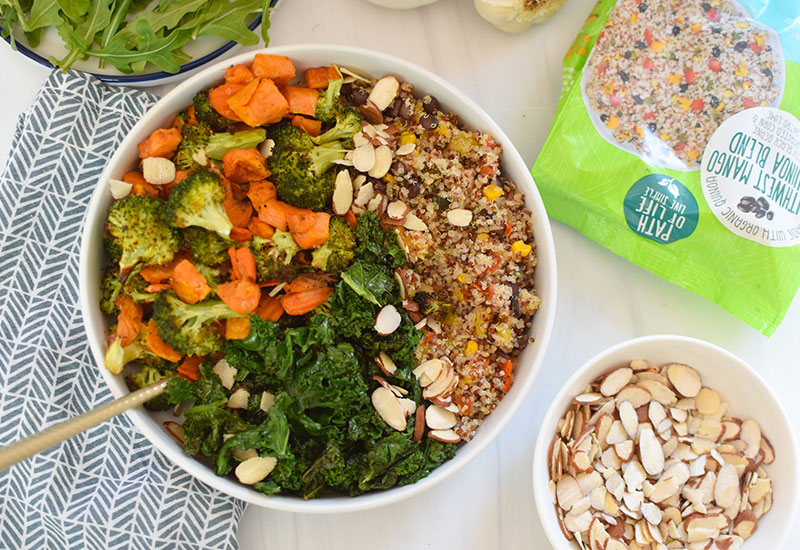
Fiber for Natural Weight Loss (and so much more!)
If you’ve been with me for a while, you know that I love talking about fiber, and for good reason: fiber is only found in plants, something we don’t eat nearly enough of in this country. As someone who cares deeply about your health, I simply won’t rest until I can get you to eat more dietary fiber. We’ll get to that in a moment.
First, let’s talk about our gut bacteria and how they are more powerful than we can imagine.
The community of microorganisms (such as fungi, bacteria, and viruses) that exist in our body is called our microbiome. If this word sounds impressive and important, it’s because it is! We are made up of roughly equal numbers of human and bacterial cells. What’s more, each one of us has about 23,000 genes, but our gut bacteria collectively have about three million.
You’ve heard that dietary fiber helps to regulate blood sugar, lower inflammation, promote healthy blood vessels, and control cholesterol. But did you know it’s also used by your beneficial gut bacteria to help you get rid of excess body fat?
These friendly microbes chow down on fiber as a fuel source so they can grow and multiply. Beyond that, they also use fiber to produce short-chain fatty acids (SCFAs), the main source of energy for the cells lining your colon.
Short-chain fatty acids trigger the release of a gut hormone called GLP-1, which sends the signal to your brain that you’re full. If GLP-1 sounds familiar, it is because it’s the same hormone mimicked in popular weight loss drugs.
I hope you can see that when you eat, you aren’t only feeding yourself, but an entire community! Your food choices matter.
Fiber and Food Preferences
Eating a lot of added sugar and ultra-processed food harms your gut balance, reducing helpful bacteria and helping harmful microbes grow. The opposite is also true, as you just learned: fiber from whole foods feeds the good guys and helps them multiply.
Why is this important? These microbes are able to shape our eating preferences to improve their own chances of survival. Sneaky little buggers!
Once you decide which of these two gangs you want running your inner domain— the do-gooders or the trouble-makers—start making small shifts in your food choices to help your preferred gang thrive. Then, pay close attention to how your food preferences begin to change over time. You’ll be surprised at how fast this happens!
My guess is you want the good guys on your side.
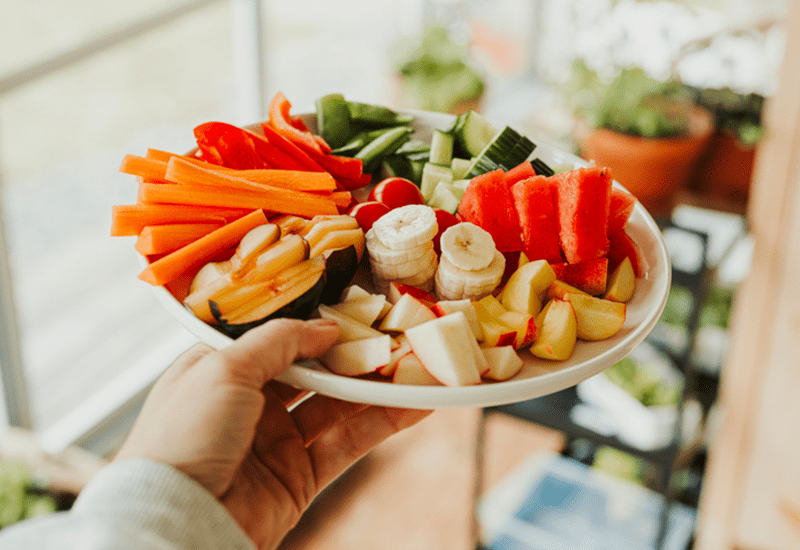
Personalizing Your Fiber Goals
Remember, we are taking a personalized approach with our meal plan, and that includes our starting fiber goal. The amount of dietary fiber you start with is based on how much fiber you eat today. You can calculate this simply by logging your meals for a few days in a free nutrition tracking app like Cronometer.
You can get a pretty good idea of where you are on the fiber spectrum by simply looking at your plate. Vegetables, fruits, beans, lentils, greens, whole grains (oats, brown rice, quinoa, barley, etc.), and nuts and seeds are where fiber is found. If you eat a serving or two from each of these categories each day, you are likely hitting the daily minimum recommendation of 30-35 grams.
If you’re not quite there, the goal is to gradually increase the amount of fiber you eat until you reach the minimum. And if you’re one of the overachievers already meeting this goal, trust me when I say that more is even better. Estimates suggest that our hunter-gatherer ancestors likely consumed far more fiber than modern Americans—often around 70–150 grams per day, depending on the population and season. And that’s because they were eating more plants!
Just in case you’re wondering, fiber supplements like Metamucil are not the same as getting fiber from whole foods. Save your money for the real deal!
Your Personal Fiber Guide
I can’t emphasize how important it is to go slow with fiber. My daily meal plan (i.e., the Mel Plan) packs an average of 65 grams of fiber per day. But I certainly didn’t start out that way. If I attempted to eat that much fiber on day one of my health journey, my body would’ve let me (and everyone around me) know about it…If you know what I mean! The same goes for you too. Take it slow and make sure you drink plenty of water.
Here are three suggestions for slowly stepping up your fiber based on your current daily fiber intake:
- If you eat ≤ 15 grams of fiber today: increase fiber to 15-20 grams per day.
- If you eat 20-25 grams of fiber today: increase fiber to 25-30 grams per day.
- If you eat 25-30 grams of fiber today: increase fiber to 30-35 grams per day.
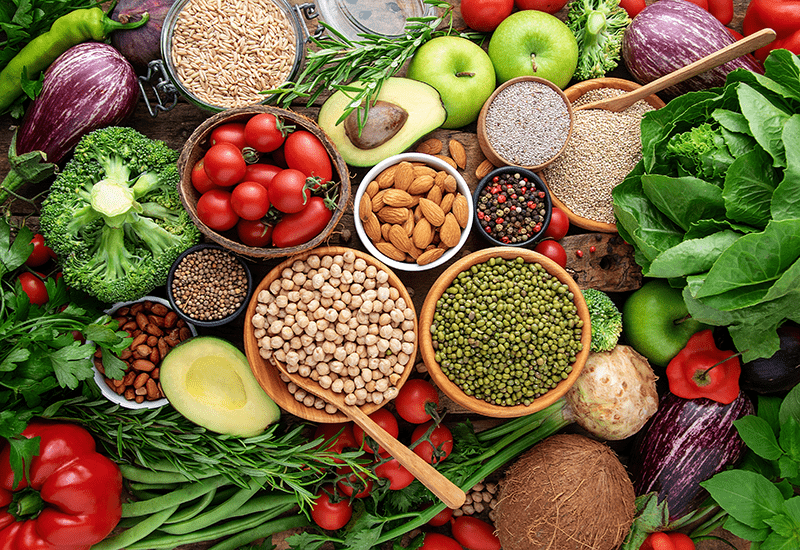
Action Step
To get your fiber baseline, spend a few days logging your meals in a free nutrition tracking app like Cronometer. It may seem like a tedious exercise, but it’s so valuable because it will tell you how much fiber your body can handle today. Once you know this number, you can gradually increase your fiber from whole plant foods by 5-gram increments over a seven-day period.
Think of this next week as the exploratory phase on your personal fiber journey. Next week I’ll offer you three meal plans with different fiber ranges to help you put this into action. If you’re excited to get started now, check out this list of 30 fiber-rich foods at Heinen’s.